
If you have a reverse osmosis system in your home, you already know it provides cleaner, better-tasting drinking water. But what many homeowners don’t realize is that the system itself collects contaminants over time. While that’s exactly what it’s designed to do, regular maintenance is essential to keep your RO system performing at its best and protecting your water quality.
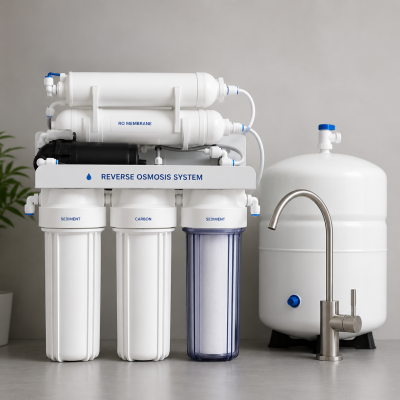 In Arizona, where hard water is a common issue, routine preventative maintenance is even more important. Here’s what can build up inside your reverse osmosis system and why staying on top of filter changes matters.
Sediment and Rust Particles
The first stage of a reverse osmosis system is the sediment filter. Its job is to trap particles before they reach the membrane.
Over time, this filter collects:
- Sand
- Silt
- Dirt
- Rust from older plumbing
- Other debris
As the filter fills up, water flow can begin to slow, and eventually some particles may reach the membrane, reducing the system’s efficiency.
Common signs of sediment buildup include:
- Slower water flow
- Cloudy drinking water
- Discolored filters during replacement
Replacing the sediment filter on schedule helps extend the life of your entire reverse osmosis system.
Chlorine and Chemical Residue
Municipal water supplies are disinfected with chlorine or chloramines. While these chemicals help make water safe, they can damage the RO membrane if they aren’t removed first.
Your carbon pre-filter captures:
- Chlorine
- Chloramines
- Volatile organic compounds (VOCs)
- Other chemical contaminants
As the carbon filter becomes saturated, it loses its ability to protect the membrane.
Signs your carbon filter may need replacing include:
- Water with a chemical or plastic-like taste
- Bitter or unpleasant flavor
- Reduced overall water quality
Mineral Scale from Hard Water
Arizona’s hard water contains high levels of minerals such as calcium and magnesium. Although a reverse osmosis system removes these minerals from your drinking water, the membrane is constantly exposed to them during the filtration process.
Over time, minerals can form a hard layer of scale on the membrane.
This buildup can lead to:
- Slower water production
- Reduced filtration performance
- Increased wastewater
- Shorter membrane life
Regular maintenance helps prevent excessive mineral scaling and keeps your RO system operating efficiently.
Biofilm and Bacterial Growth
Many homeowners are surprised to learn that biofilm can develop inside a reverse osmosis system if maintenance is neglected.
Biofilm is a thin layer of microorganisms that can grow inside:
- Filter housings
- Storage tanks
- Tubing
- Internal components
It thrives in stagnant water and systems with overdue filter changes.
Possible signs include:
- Musty or earthy tasting water
- Cloudiness
- Slimy residue during servicing
Routine sanitizing and timely filter replacements help keep your drinking water fresh and safe.
Carbon Fines
Activated carbon filters naturally release tiny black particles known as carbon fines.
These particles are harmless, but they can:
- Collect inside tubing
- Settle in the membrane housing
- Cause temporary black specks in water after a filter replacement
A proper system flush after installing new filters removes these particles before they reach your faucet.
Why Preventive Maintenance Matters
Your reverse osmosis system works every day to remove contaminants from your drinking water. As it does its job, filters and membranes gradually become loaded with everything they capture.
Ignoring maintenance can lead to:
- Reduced water quality
- Slower water flow
- Poor tasting water
- Premature membrane failure
- Higher replacement costs
Routine preventative maintenance keeps your system operating efficiently while extending the life of its components.
Keep Your Reverse Osmosis System Running Like New
A well-maintained reverse osmosis system can provide years of dependable performance and consistently great-tasting water. Replacing filters on schedule, sanitizing the system, and inspecting components regularly helps ensure your family continues to enjoy clean, reliable drinking water.
If it’s been a while since your last service, now is the perfect time to schedule preventative maintenance. Staying ahead of buildup today can help prevent costly repairs and keep your home’s water quality at its best.